ROLEX_SEA DWELLER
The Rolex Sea‑Dweller: a purpose‑built legend beneath the surface
There are few watches that feel as purposeful and as quietly iconic as the Rolex Sea‑Dweller. Unlike the Submariner, which long ago crossed into mainstream recognition, the Sea‑Dweller has always remained a more discreet, almost insider’s choice. It wasn’t designed to be seen. It was designed to solve a problem.
And that origin story is what still defines it today.
Origins: engineering first, everything else second

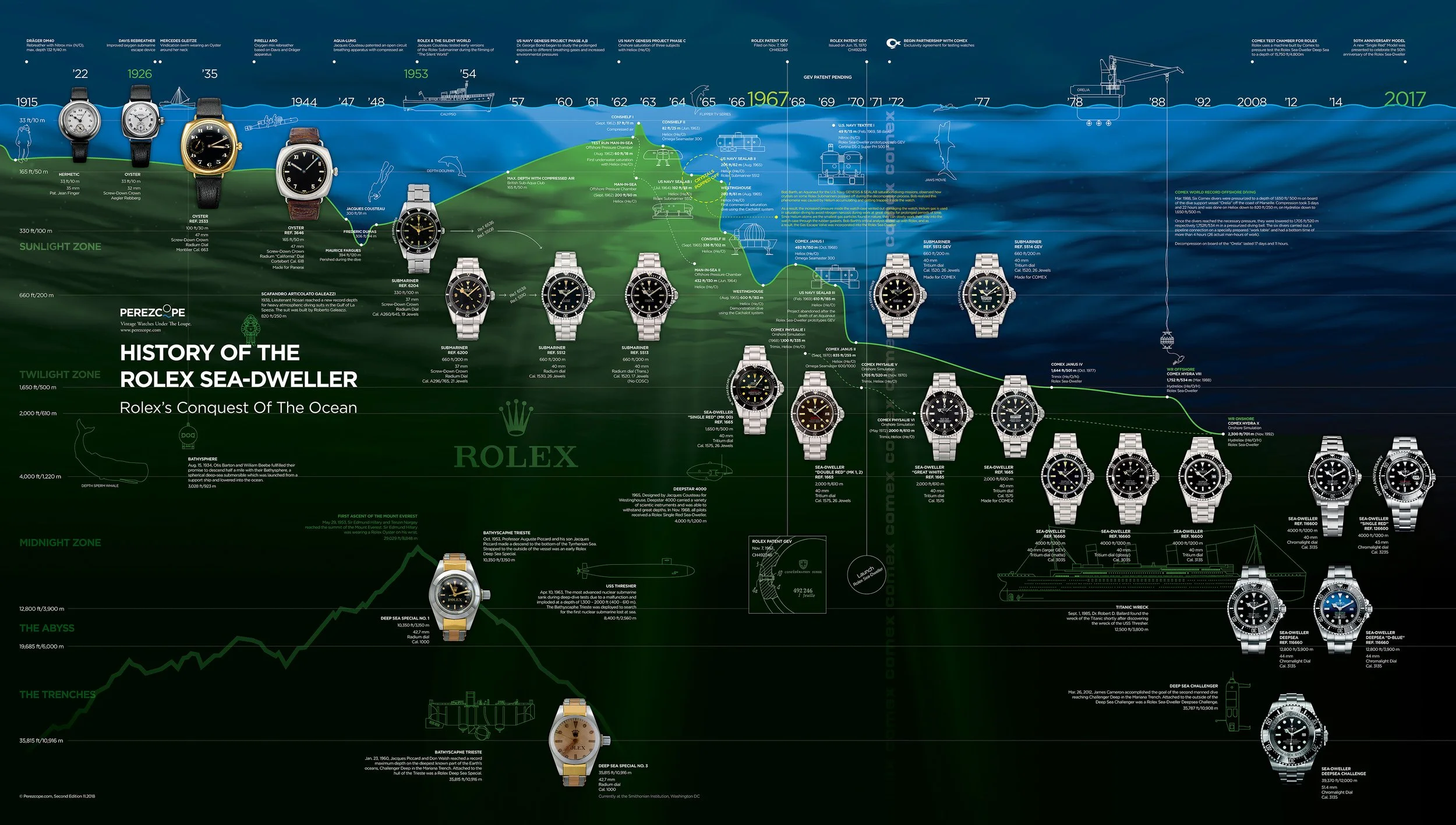
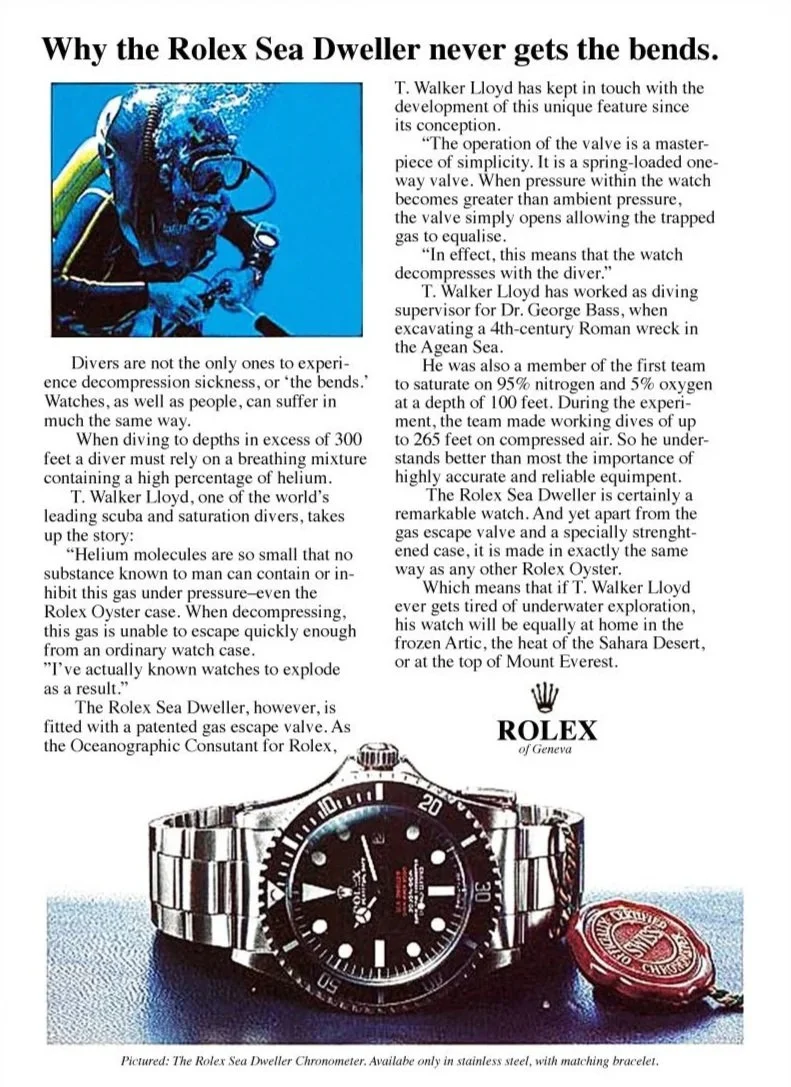
The Sea‑Dweller was born in the late 1960s, at a time when saturation diving was pushing human limits underwater. Divers working in pressurized environments discovered a very real issue: helium particles would infiltrate watch cases during long dives. During decompression, that trapped gas expanded and crystals would literally pop off.
Rolex’s response was the helium escape valve, introduced in 1967. It allowed gas to exit the case safely without compromising water resistance. It’s one of those rare technical solutions that feels obvious in hindsight, but changed everything at the time.
From that moment on, the Sea‑Dweller wasn’t just another dive watch, it was a professional instrument.
Early references: 1665 and the foundation of the legend
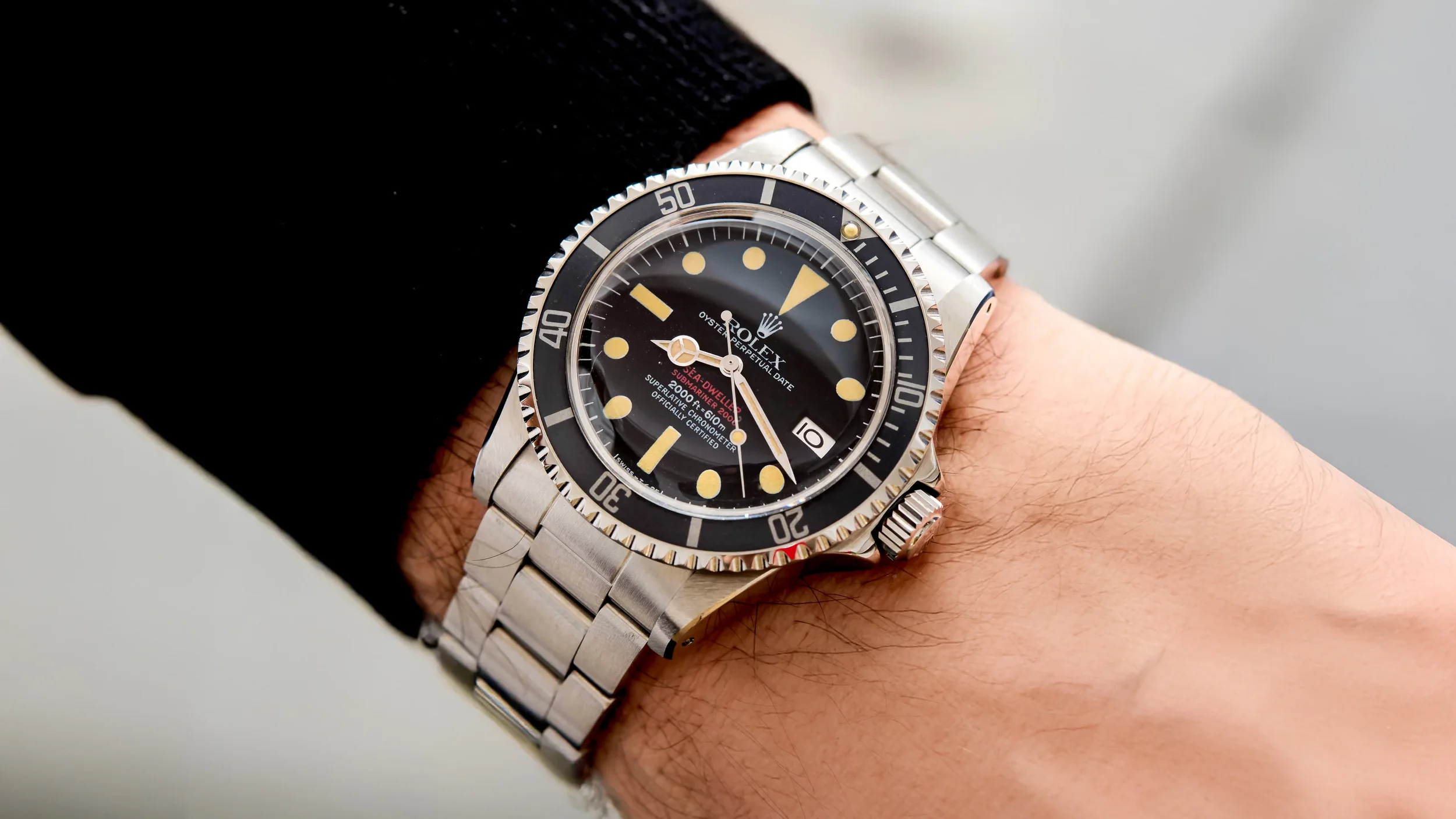
The reference 1665 is where the mythology really begins. This single reference spans two distinct identities: the Double Red Sea‑Dweller (DRSD) and the Great White.
Double Red Sea‑Dweller (DRSD)
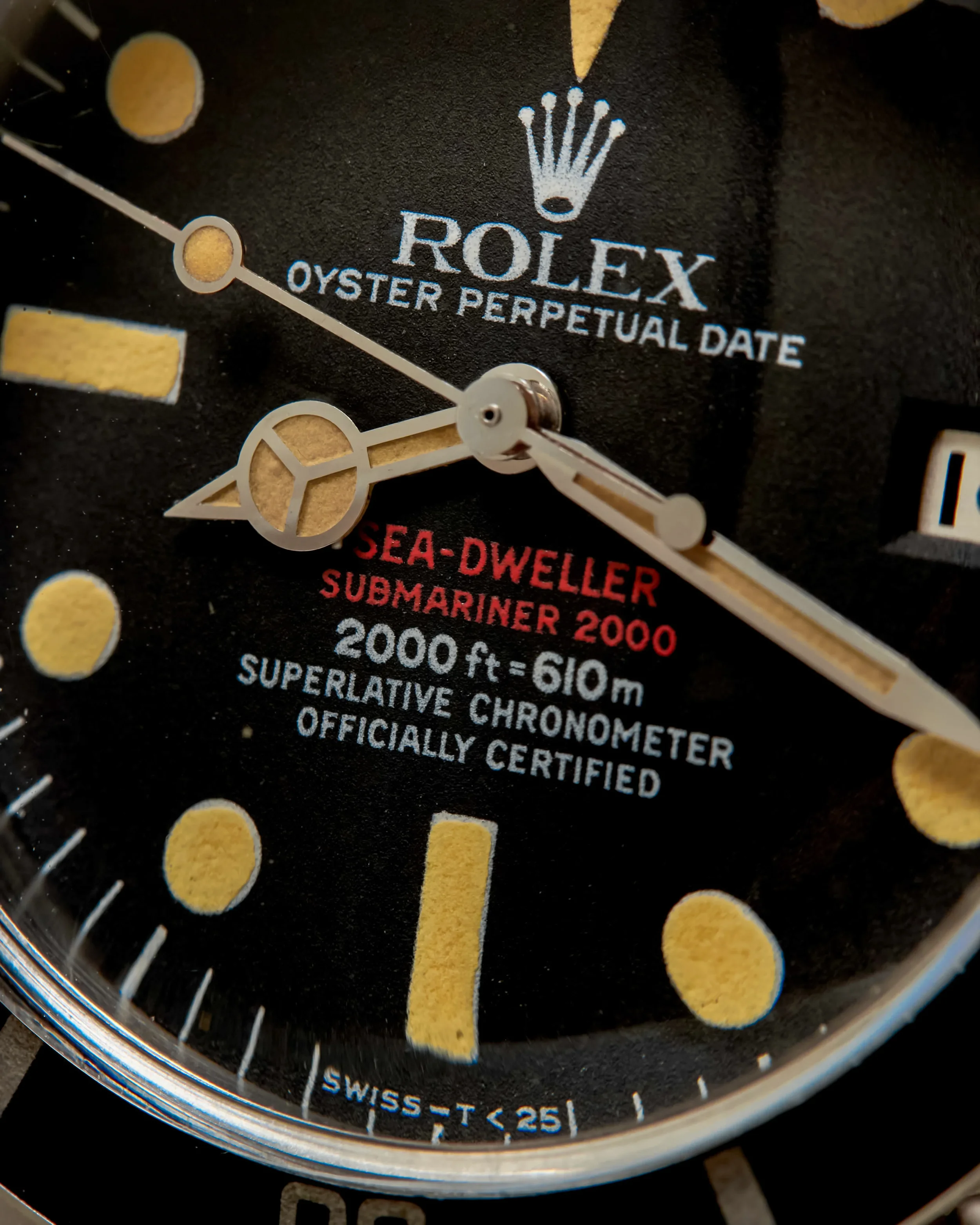
The DRSD takes its name from the two lines of red text on the dial. Beyond that, it carries all the charm of early Rolex tool watches: plexiglass crystal, tritium lume, and a slightly raw, almost experimental quality.
But within the DRSD, things quickly become more nuanced.
DRSD Dial Variations (Mk I – Mk IV)
Mk I – “Patent Pending”~1967–1969: Earliest version; lighter printing, caseback marked “Patent Pending”; rare and slightly imperfect feel
Mk II~1969–1970: More structured typography; transitional execution
Mk III~1970–1972: Better balance and legibility; richer red print
Mk IV~1972–1977: Bolder fonts; closer visually to later Great White dials.
What stands out with the DRSD is how alive each piece feels. The red text ages differently, the lume shifts in tone, and small inconsistencies give every watch its own personality.
Great White: understatement takes over
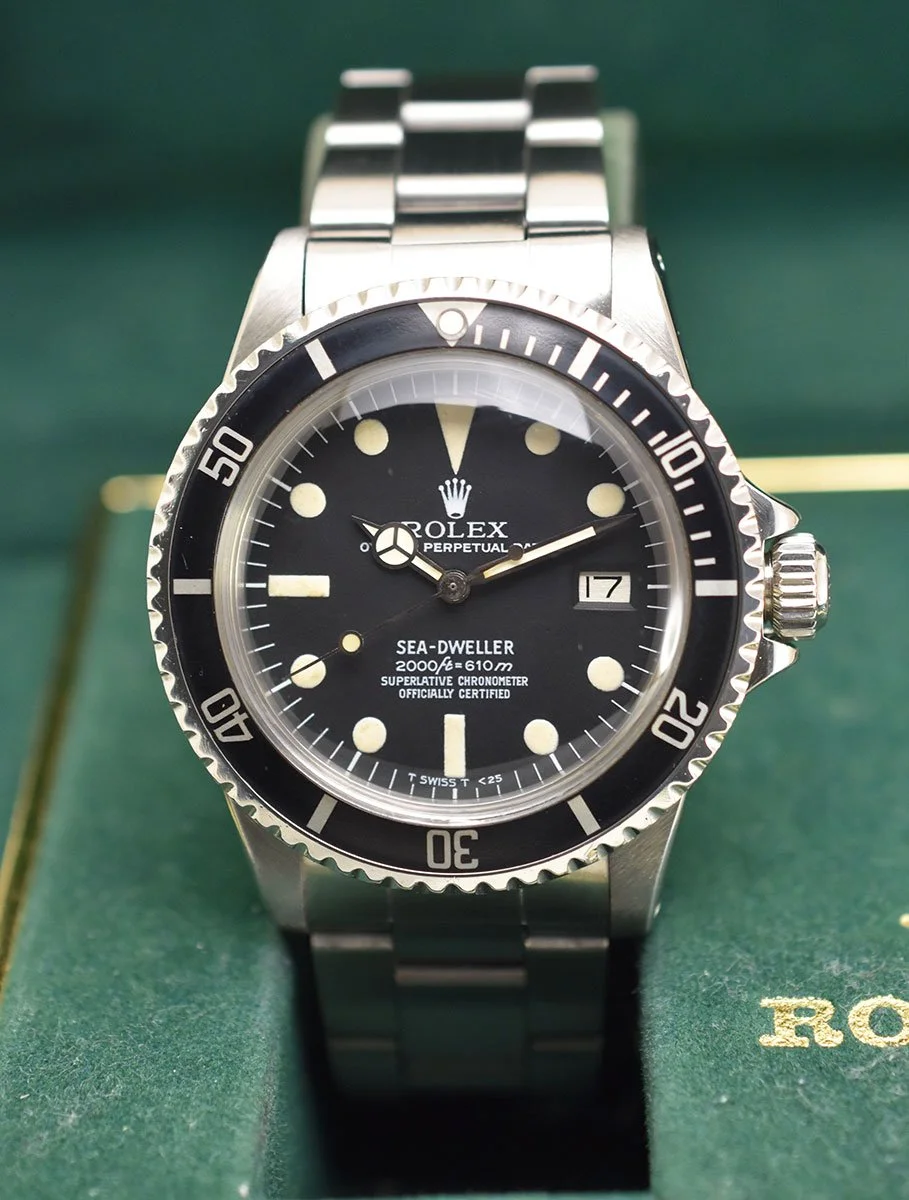
Around 1977, Rolex removed the red signature entirely. The Sea‑Dweller became more discreet, more technical in appearance, what collectors now call the Great White.
Great White Dial Variations (Mk I – Mk IV)
Mk I~1977–1978: Transitional layout, still close to late DRSD
Mk II – “Rail Dial”~1978–1979: Perfect alignment of “SUPERLATIVE CHRONOMETER” and “OFFICIALLY CERTIFIED” text
Mk III~1979–1980: Slightly less symmetric typography
Mk IV~1980–1983: Cleanest and most modern execution
The shift to modernity: sapphire and the 16660
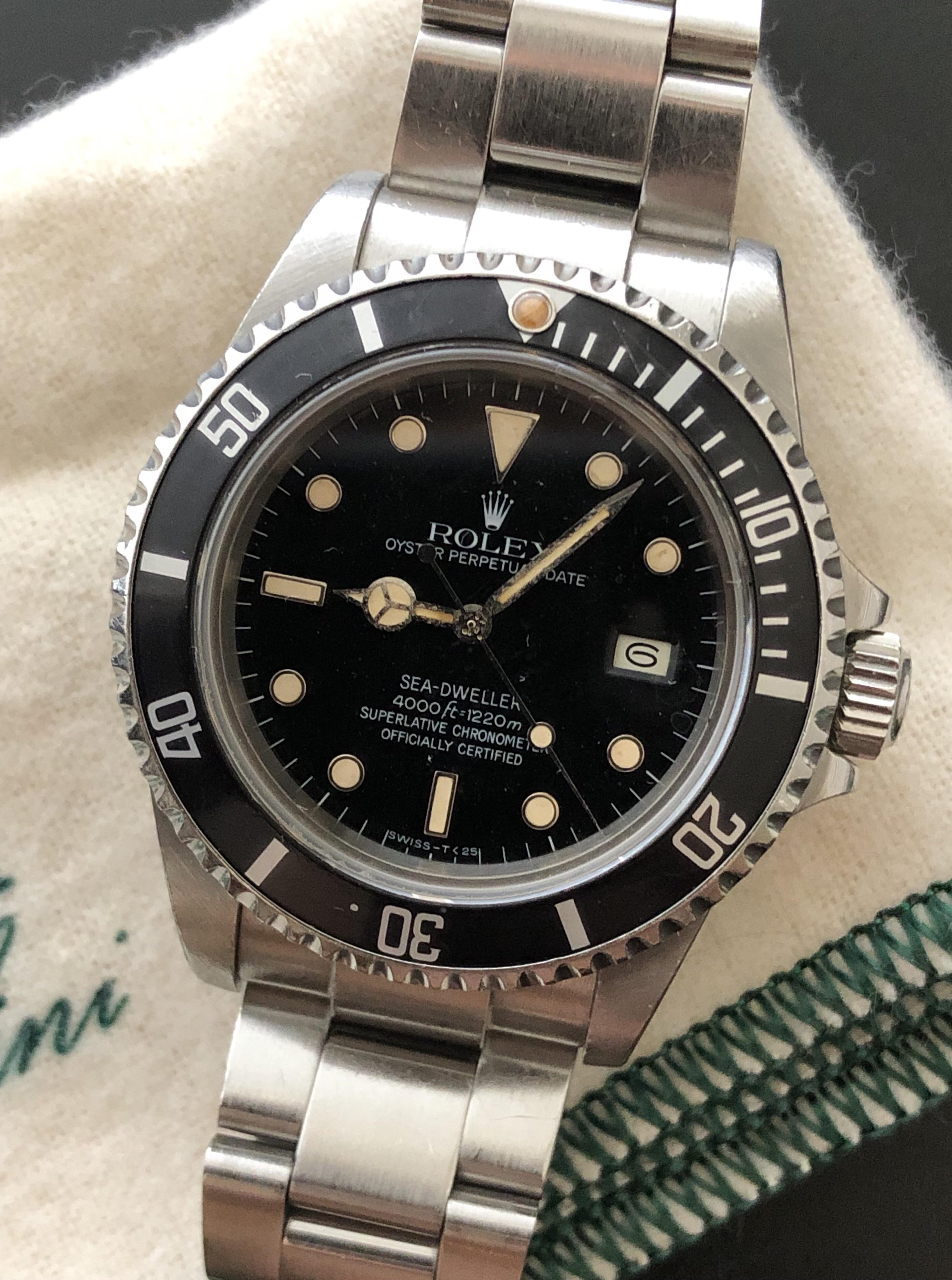
With the 16660 (“Triple Six”), Rolex transitioned the Sea‑Dweller into a new era.
The biggest changes:
Sapphire crystal replaces plexiglass
Depth rating increases significantly
Case becomes thicker and more robust
Early 16660s retain matte dials, very much in the spirit of the 1665. Later versions move to glossy dials with white gold surrounds, marking a clear philosophical shift—from pure tool to refined instrument.
The long benchmark: 16600
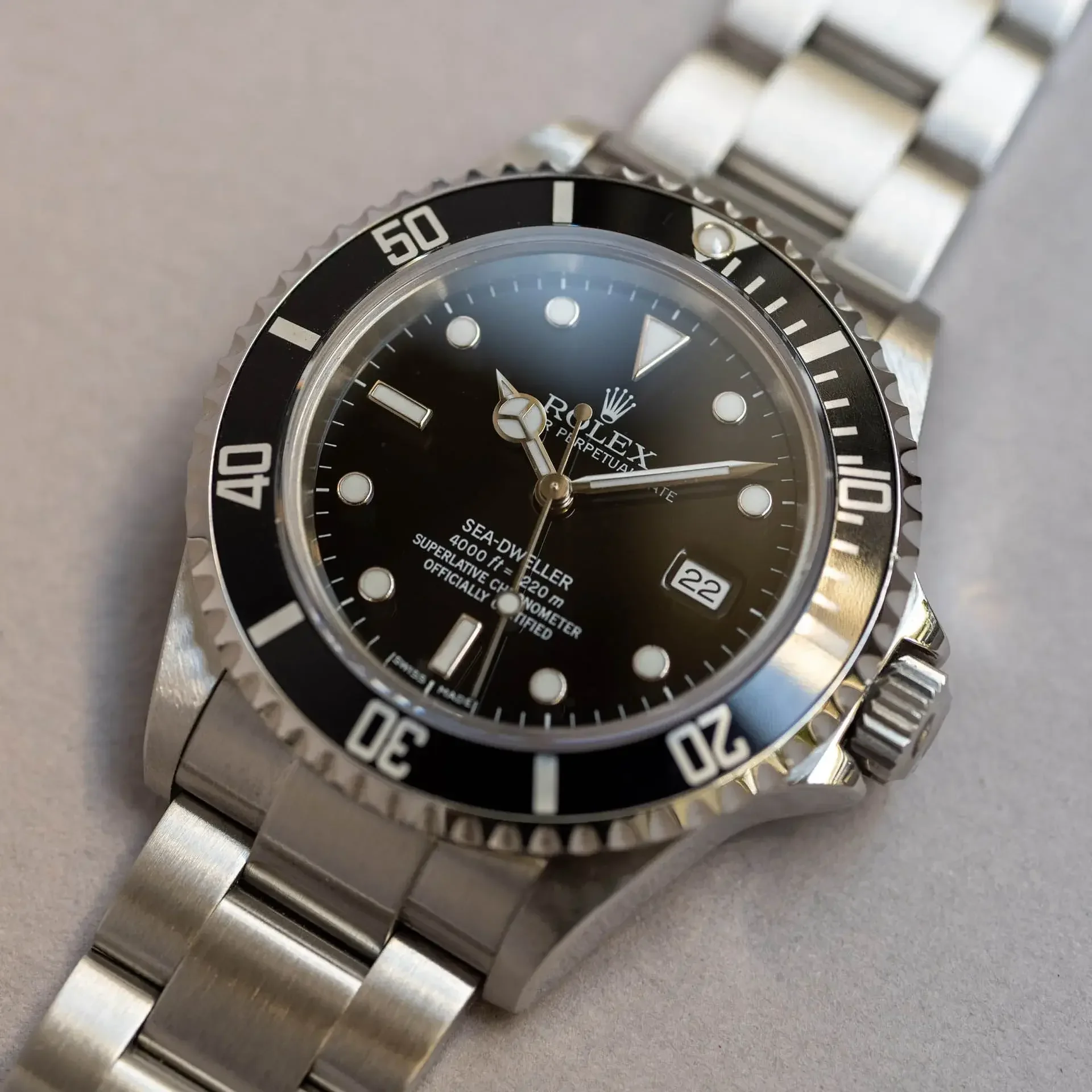
The 16600 is, in many ways, the most balanced Sea‑Dweller ever made.
Produced for roughly 20 years, it offers:
Classic proportions
Sapphire and modern reliability
A clean, no-nonsense design
It doesn’t have the romance of the 1665, nor the boldness of modern references—but that’s exactly why it works. For many, it’s the true daily Sea‑Dweller.
The modern era: evolving identity 116600
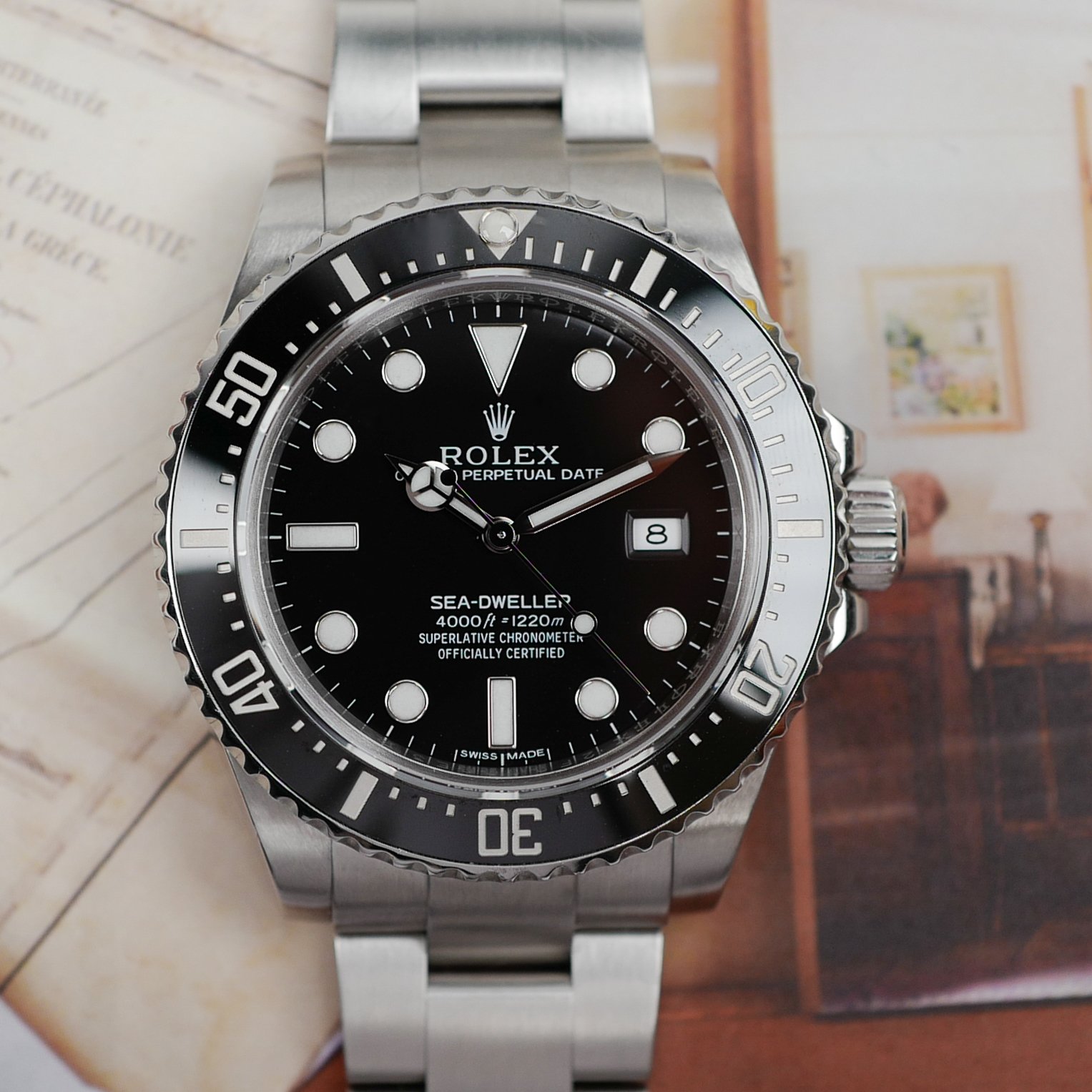
Rolex reintroduced the Sea‑Dweller in a very different market.
The 116600 (Sea‑Dweller 4000) stayed faithful—no cyclops, ceramic bezel—but had a short production life, making it increasingly collectible.
Then came the 126600, which marked a visible shift:
Case increased to 43mm
Cyclops lens introduced (for the first time on a Sea‑Dweller)
Red text returned as a nod to the DRSD
It was controversial, especially among purists. But technically, it made sense—and in practice, it made the watch more usable.
Why the Sea‑Dweller still resonates
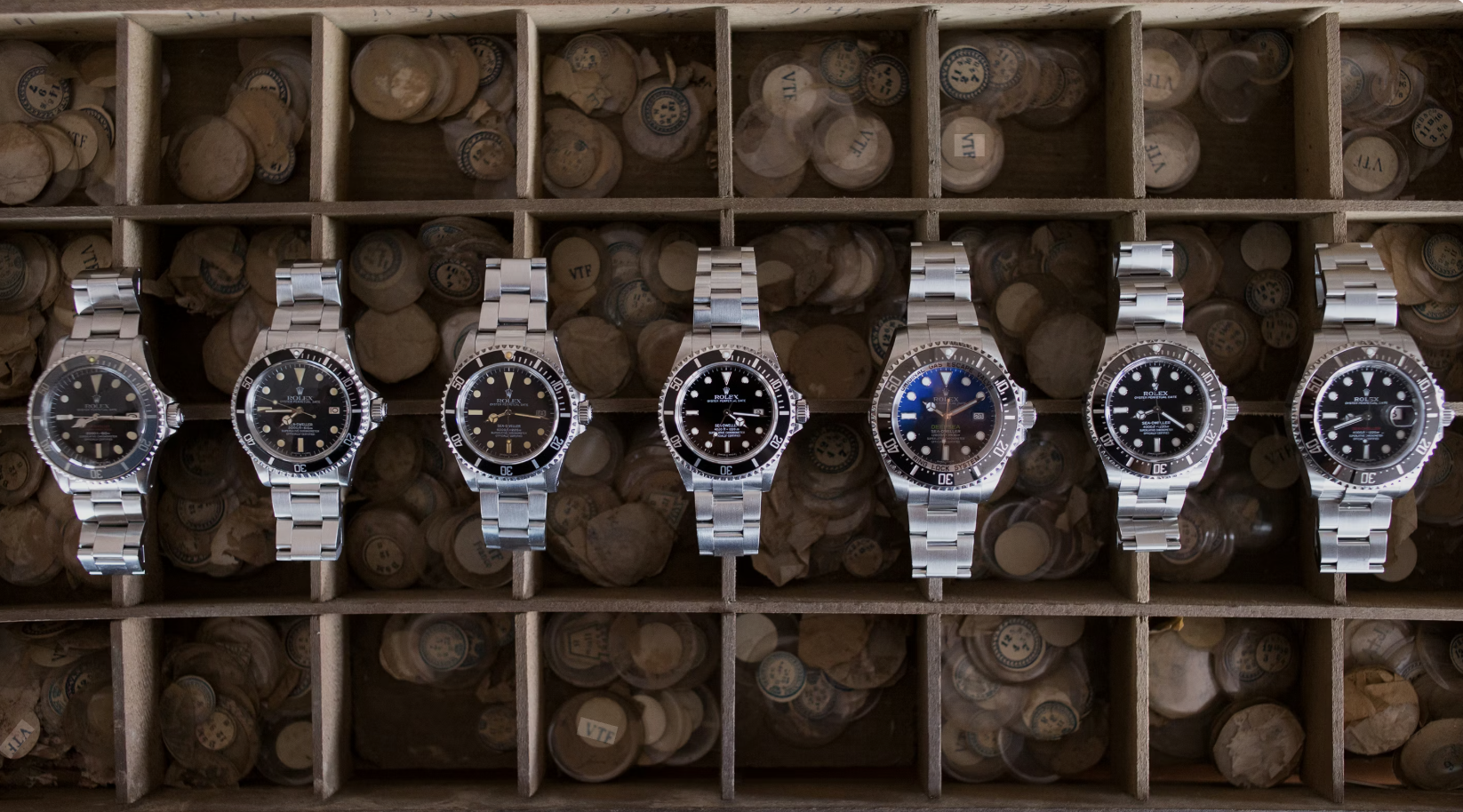
If there’s one thing I’ve learned spending time around these watches, it’s this:
The reference tells you what it is. The dial tells you what it feels like.
A Rail Dial has a precision that feels almost engineered.
A Mk I DRSD feels raw, slightly imperfect, and deeply authentic.
A late Great White feels resolved—like Rolex had figured everything out.
Add to that the aging of tritium, the warmth of the lume, subtle mismatches between hands and dial, and suddenly you’re not looking at a product anymore—you’re looking at something with a life behind it.
Why the dial matters more than the reference
For me, the Sea‑Dweller represents a very pure idea of what a watch should be. It wasn’t designed for marketing. It wasn’t designed for display. It was designed to work—under pressure, literally.
And even today, whether it’s a vintage 1665 or a modern 126600, that DNA is still there.
It doesn’t try too hard.
It doesn’t need to.
And that’s exactly why it remains one of the most compelling watches Rolex has ever built.